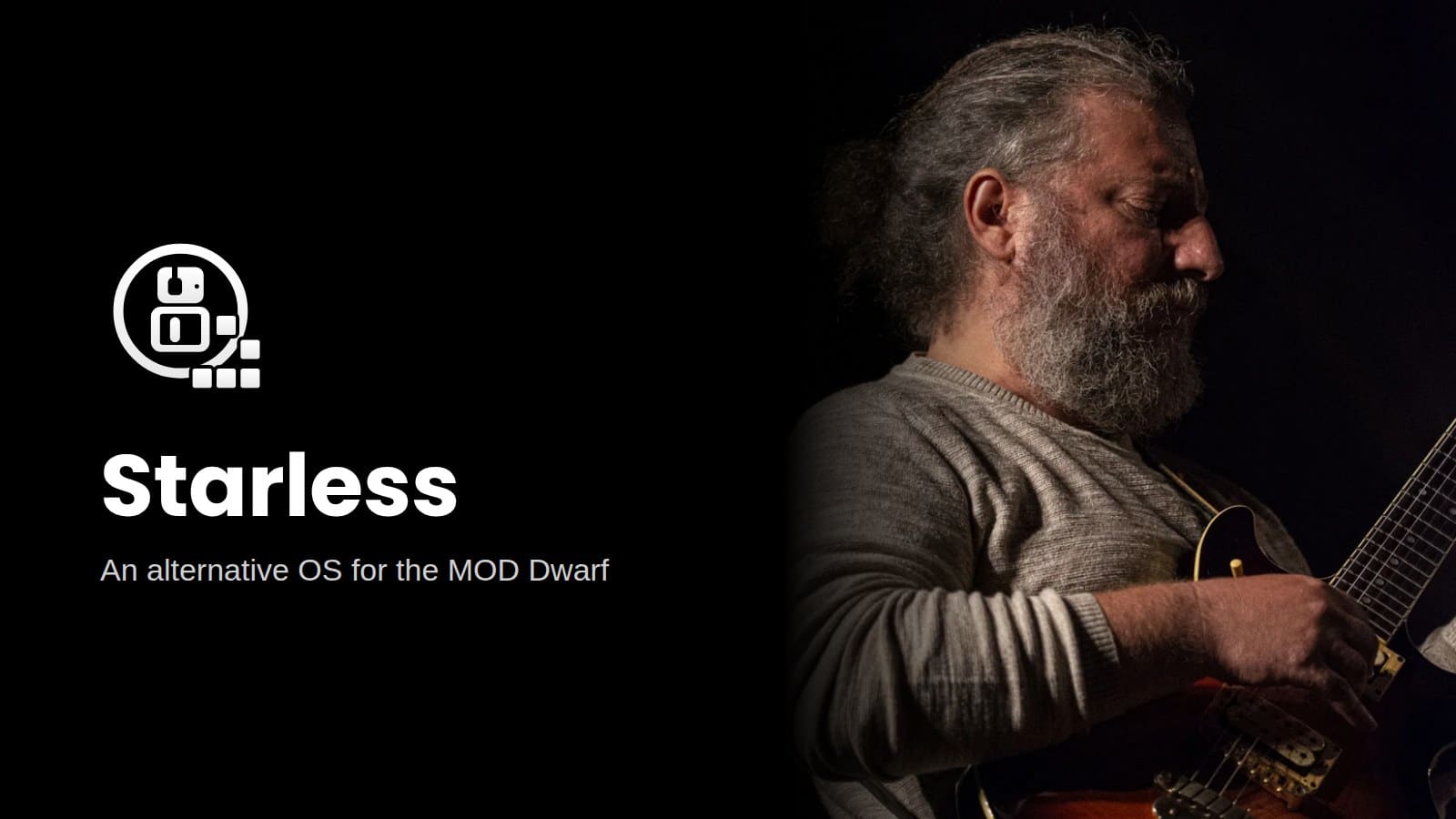
In 2024 we opened the MOD OS images, so anyone could change the software and share the result. One Dwarf owner did exactly that. Seventeen releases later, Starless has its own community, and it changed how we develop MOD OS. Here is his story, in his own words, and what it led to.
Why I started Starless
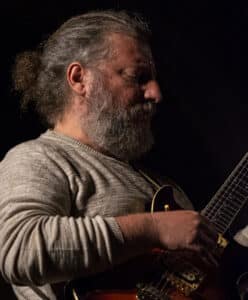
By Andrea Del Signore
I first heard about MOD in its early days through the open source world, which I’ve always been passionate about. Then I lost track of it, until I came across an ad for a used Dwarf and bought it.
At the time my main unit was a Line 6 Helix LT, and I immediately saw the Dwarf’s potential: a compact device with creative routing options, a perfect fit for my acoustic and classical guitar rig. But a few software limitations made me doubt it could work live for me. They were small details, but vital ones. I couldn’t change a pedalboard’s parameters on the fly without a computer, not even to turn down a reverb or adjust an EQ. The plugins and the creative possibilities were there, but those few gaps kept me dragging the big, heavy Helix to every gig.
I noticed that almost all the sources were available on GitHub and that, in theory, I could modify the software and patch the official images.
Andrea Del Signore
Then I noticed that almost all the sources were available on GitHub and that, in theory, I could modify the software and patch the official images. I spent the next three or four evenings on the couch reading code and setting my first goals. The plan was simple. First, a minimal change to get familiar with the codebase. Then, the few features I needed to play live without worrying, so I could finally replace the Helix.
After a few weeks of trial and error I built my first image. It introduced port groups in the UI and two complementary ways to edit pedalboard parameters: new firmware and a new mobile-friendly page, now known as the Performance View.
From there, the community stepped in. Abotte, Rom, Fer and others adopted the image, tested it and gave me feedback, and that is how Starless was born. The name comes from what I was working on at the time: a classical guitar arrangement of King Crimson’s song of the same name.
A few months later I sold my Helix and kept adding features that help both while editing and during performances. Today other talented developers, such as Stefan and Andy, are helping me refine Starless for use cases beyond my own.
I want to thank Abotte, Toferyu, Remy, Rom, Fer, Zwabo, UnvisualStudio and many others, along with the MOD team for the help in the very first days. And finally, Gianfranco and MOD Audio, for so warmly welcoming the development of this project.
What Starless is today
Starless is an alternative OS for the MOD Dwarf, made possible by the open images we published with MOD OS 1.13.5 in October 2024. It is now on version 17, and its latest release added, among other things:
- Complete pedalboard editing from the Dwarf itself, no computer needed
- Tone3000 support in the NAM, cabinet and IR loaders
- Stereo cables and cable teleporting, for tidier pedalboards
- A per-plugin CPU monitor, mouse-wheel zoom and a canvas that resizes itself as you add plugins
AndyCap has also been working on mapping the same control to the Dwarf’s own controls, MIDI, CC and CV at the same time, now in beta. See it in action on the forum.
Try Starless
Starless is Andrea’s project, with its own name, schedule and decisions. It is an unofficial image, so MOD does not provide support for it. The community does, on the forum.
- Back up first. Use the Backup & Restore function in the web interface (see the MOD wiki).
- Install the latest Starless image as a manual upgrade. Your pedalboards and downloaded plugins stay where they are.
- Ask on the forum if anything is unclear. Here is one Dwarf owner’s first install, step by step.
What Starless changed: the new MOD OS release flow
Starless showed us something important. When the software is open, the people who use it every day will improve it, and their work deserves a real way into the product. So we changed how official MOD OS releases are made.
MOD OS is now released through three channels, a model inspired by how long-running open source projects like Debian work:
STABLE
Official production releases, after testing. What most users run.
TESTING
Official release candidates, built from MOD’s work and community contributions, and offered in the web interface. A new one every two to four weeks.
COMMUNITY
Independent images, built and distributed by their authors. Starless is the first.
The first release candidate under this flow is MOD OS 1.14, and it is already built from community work. It brings Tone3000 into the web interface, so you can browse and load captures directly on your device, and a “Report an Issue” button, so testing is one click away. The announcement of the new flow publicly thanked five community contributors: Andrea Del Signore, Andy Cap, Remy D, Stefan D and Mark Melvin.
In other words: what happened with Starless is now how MOD OS moves forward. Community work flows in, gets tested in the open, and ships.
Join in
All of this happens on the forum, through people testing, reporting problems and asking for features. Try a release candidate and tell us what breaks. Try Starless and tell Andrea what you would like next. And if you have your own idea for MOD, the forum is where it starts.
Get the next story by email
We will be sharing more of what the community builds. Sign up to get it in your inbox.